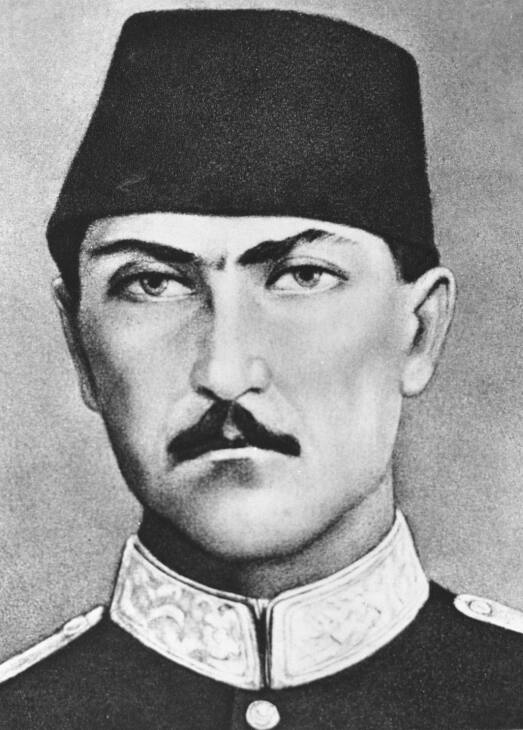
Ali Rıza Efendi
His father served in public administration and later worked in the timber trade. He supported a modern education for Mustafa and died while his son was still young.
Personal life · 1881-1938
Beyond the public figure was a man who loved books, music, and the company of those close to him. His home was a place for family, friendship, and conversations that often lasted late into the night.
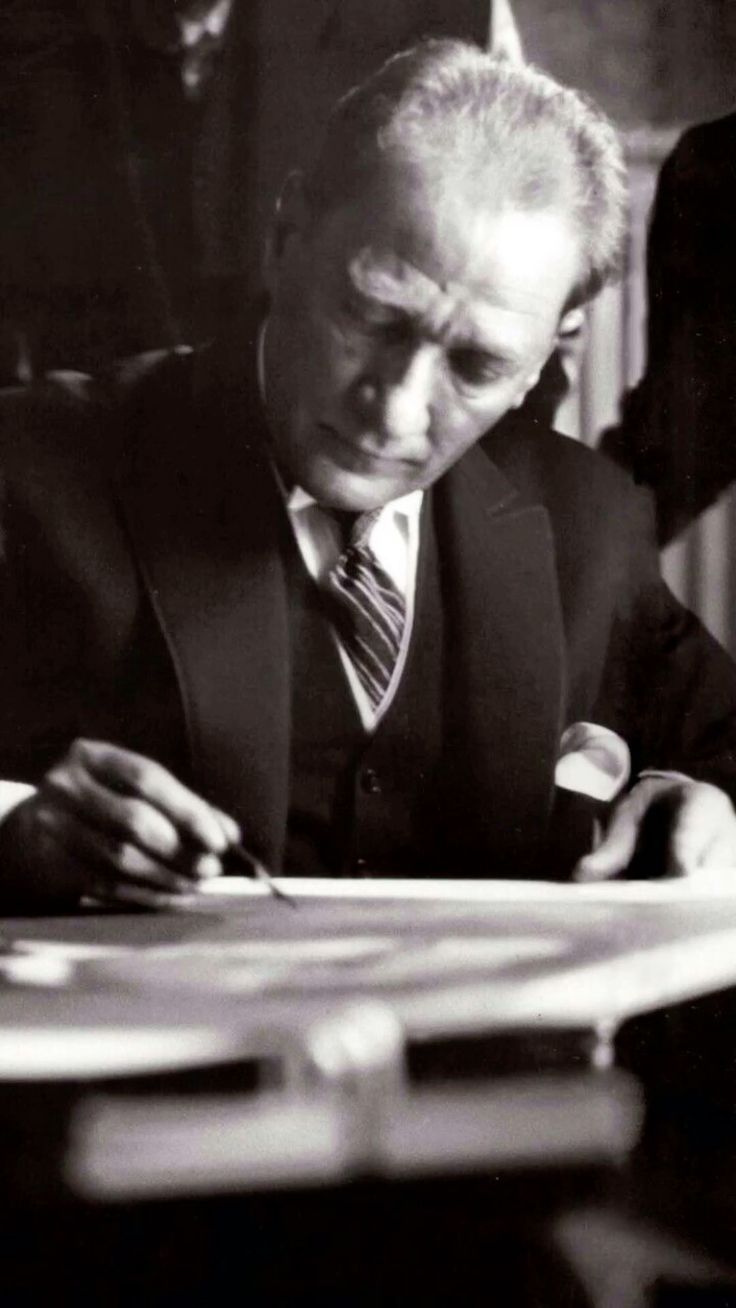
Salonika, 1881
Mustafa was born in Salonika, now Thessaloniki, to Ali Rıza Efendi and Zübeyde Hanım. The busy Ottoman port was home to Turkish, Greek, Jewish, Slavic and other communities during his childhood, which exposed him early to a multilingual, changing society.
His father served in public administration and later worked in the timber trade. He supported a modern education for Mustafa and died while his son was still young.
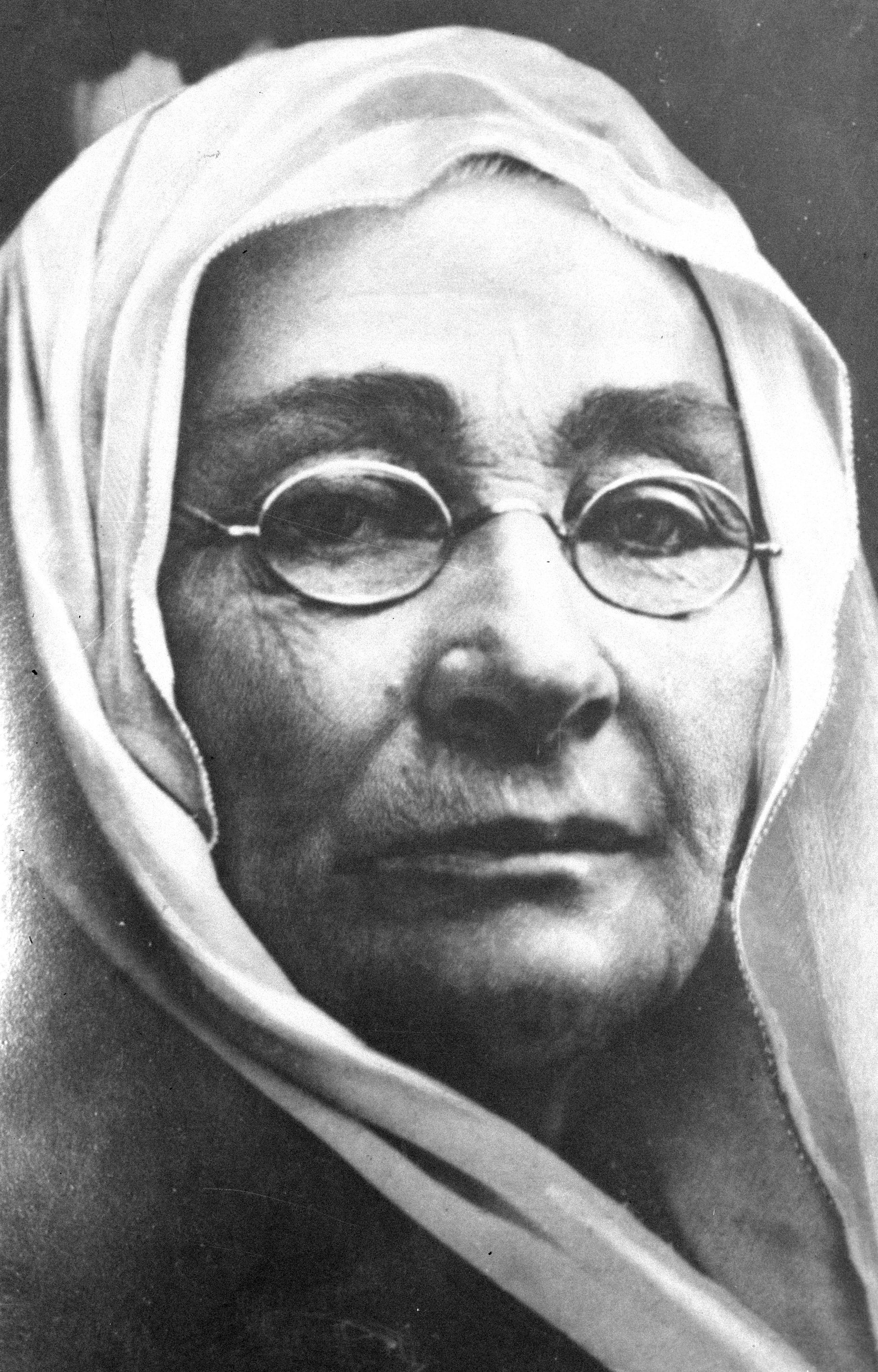
His mother raised the family through financial uncertainty after Ali Rıza’s death. Mustafa remained strongly attached to her; she died in İzmir in January 1923.
Makbule was the only one of his siblings to survive into adulthood. His will later provided her with an income and continued use of her house in Çankaya.
Official family records name five siblings in addition to Mustafa. Four died during childhood, an experience that left Mustafa and Makbule as the surviving children of the family.
Born Mustafa, he became known as Mustafa Kemal during military school. The Grand National Assembly granted him the surname Atatürk, meaning "Father of the Turks", in 1934. The surname was reserved for him by law.
Verified against the Turkish Ministry of Culture and Tourism biography and the Grand National Assembly biography.
1923-1925
Atatürk married Latife Hanım in İzmir on 29 January 1923. She accompanied him on journeys through the country and became a visible presence beside the new republic’s leader. Their marriage ended on 5 August 1925.
The modest vineyard house at Çankaya contained private rooms, a library and working spaces. Marked and underlined books still offer tangible evidence of how closely reading and governing were connected in his daily life.
The marriage coincided with the transition from war to republic. Latife travelled with Atatürk and appeared beside him in public at a time when the visibility of women was becoming part of the republic’s reform programme. The official record establishes the marriage and divorce dates but does not provide a definitive explanation for their separation.
Fikriye Hanım, a relative who spent time in Atatürk’s household during the National Struggle, occupies a complicated place in memoirs about his private life. Accounts disagree over the precise character of their relationship and over the circumstances surrounding her death in 1924. For that reason, this page records her importance to his household without presenting later romantic narratives as settled fact.
His social circle included military comrades, politicians, diplomats, writers, artists and scholars. Guests later recalled long dinner-table conversations about policy, language, history, music and current affairs. These gatherings often became informal working sessions.
The dates and surviving details of the residence are documented by the Ministry’s Atatürk Museum Mansion guide. Private motives for the divorce remain outside the documentary record, so this page does not speculate.
Family by choice
Atatürk had no biological children, yet children occupied a distinct place in his private life. Hasan Rıza Soyak remembered that, in Atatürk’s vocabulary, “child” meant love. He also recalled that he valued children’s candour above all.
Having lost his own father at the age of twelve, Atatürk understood the pain of losing a parent at a young age. He supported children facing poverty or the loss of their families by helping provide homes, education, professional training and, in some cases, study abroad.
Abdürrahim, Zehra (Zühre), Sabiha, Afet, Rukiye, Nebile, Ülkü and Sığırtmaç Mustafa
İhsan and Ömer
A note on terminology: This archive distinguishes Atatürk's 8 adopted children from the 2 children he took under his protection. In Turkish, manevi evlat describes a child treated as one's own, while himaye refers to care and support without necessarily describing a parent-child bond.
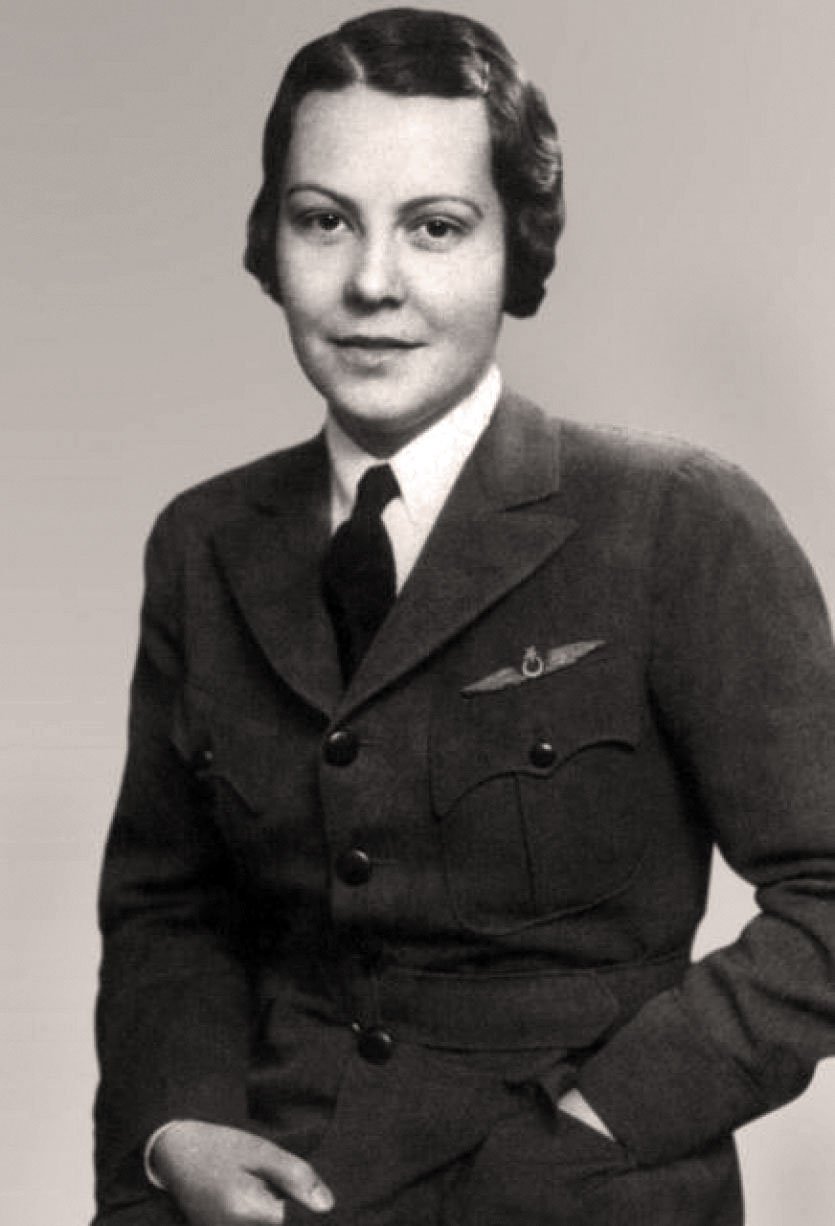
Orphaned young in Bursa, she met Atatürk during his 1925 visit and joined the Çankaya household with her brother’s consent.
After attending Çankaya Primary School and Üsküdar Girls’ College, she entered the Turkish Aeronautical Association’s aviation school in 1935. Further glider training in the Soviet Union and instruction at Eskişehir prepared her for military flying.
Her flights during the 1937 Aegean and Thrace manoeuvres and operations in Dersim made her a highly visible figure. She toured the Balkans by air in 1938, became chief instructor at Türkkuşu, and later served on the association’s board. She died in 2001.
Born in 1932 to Vasfiye and Tahsin Çukuroğlu, she was named by Atatürk and brought into his close family circle as an infant.
Vasfiye Hanım had herself been raised by Atatürk’s mother, Zübeyde Hanım. Atatürk grew deeply attached to Ülkü, who often accompanied him on journeys and appears with him in many of the period’s best-known family photographs.
He was struck by her maturity and intelligence. Ülkü was five and a half when he died in 1938; his will provided her with a monthly payment from the income of his İş Bankası shares. She lived until 2012.
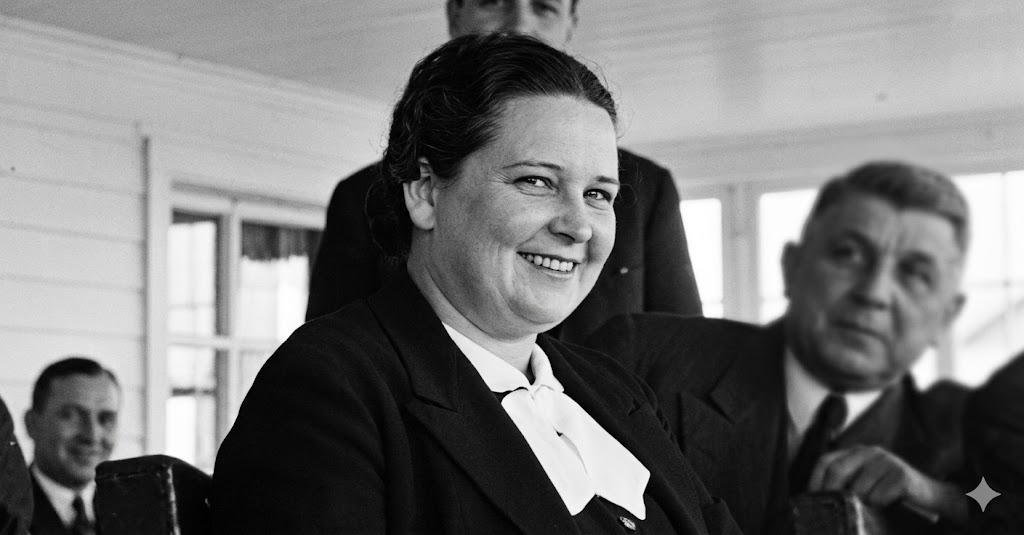
Atatürk met the young teacher in İzmir in 1925 and supported her wish to continue her education and learn a foreign language.
Born near Dojran, her family moved to Türkiye after the region passed to Greece. With her parents’ agreement, she studied French in Lausanne from 1925 to 1927 and continued at Notre Dame de Sion in Istanbul. She qualified as a history teacher and joined the Ankara Music Teachers’ School.
İnan helped establish the Turkish Historical Society, served for years as its vice-president, directed Ankara University’s Institute of the History of the Turkish Revolution and pursued an academic career to professorship. Her books preserve important testimony about Atatürk’s ideas and working life. She died in 1985.
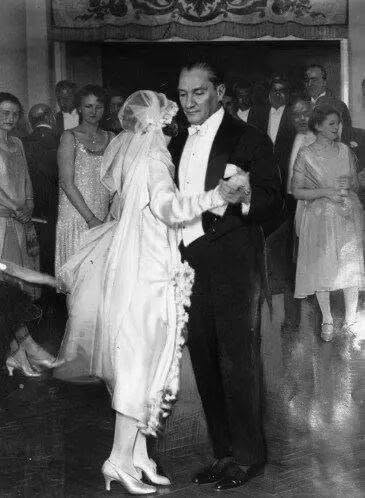
Nebile was among three students brought from Istanbul’s Çapa Teacher Training School to Dolmabahçe Palace in July 1927.
She remained as Atatürk’s spiritual daughter and continued her education in Ankara. On 17 January 1929 she married Tahsin Bey, then first secretary at the Turkish embassy in Vienna, at Ankara Palas; photographs preserve her dance with Atatürk at the celebration.
Nebile later became seriously ill and died only a few years after Atatürk. She was one of the five children expressly provided for in his will.
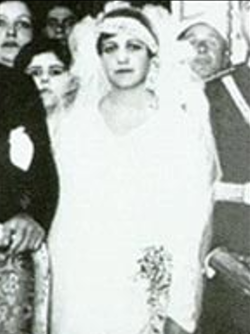
Atatürk met the orphaned Rukiye during a visit to Konya, brought her to Ankara and arranged for her care and education.
She later married Gendarmerie Captain Hüsnü Erkin. Cabinet ministers witnessed their civil ceremony in Ankara; the wedding celebration took place at Dolmabahçe Palace, where Atatürk shared the first dance with her.
The marriage produced a son and, later, two granddaughters. Rukiye lived until 1995. Atatürk’s will assigned her a monthly payment from the annual income of his İş Bankası shares.
The daughter of a man from Amasya named Mehmet, Zehra studied with Sabiha and Rukiye at the small school in the Çankaya grounds.
She developed a strong interest in literature and later attended Arnavutköy American College before being sent to Britain for further study. Accounts remember Atatürk taking a close interest in her reading and intellectual development.
In November 1935, while returning from Britain through France, she died after falling from a train near Amiens. Her body was returned to Istanbul and buried at Maçka Cemetery.
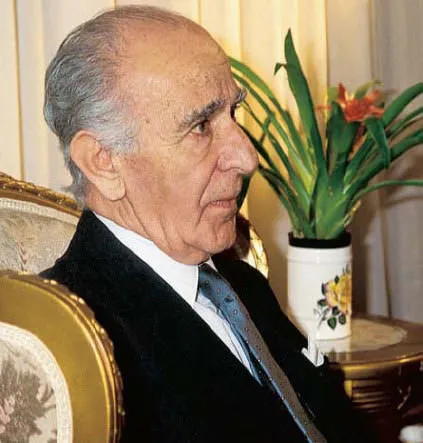
Brought from Van at about eight years old, Abdürrahim was raised for a time in Zübeyde Hanım’s Akaretler home.
After the War of Independence he was brought to Ankara, attended a school near Çankaya and later the Industrial School. Atatürk sent him to Berlin Technical University in 1929 and paid his expenses.
He took the surname Tuncak after 1934 and later translated during negotiations for the purchase of the yacht Savarona. In his recollections, he described Zübeyde, Makbule and Atatürk as the only family he had known. He died in 1999.
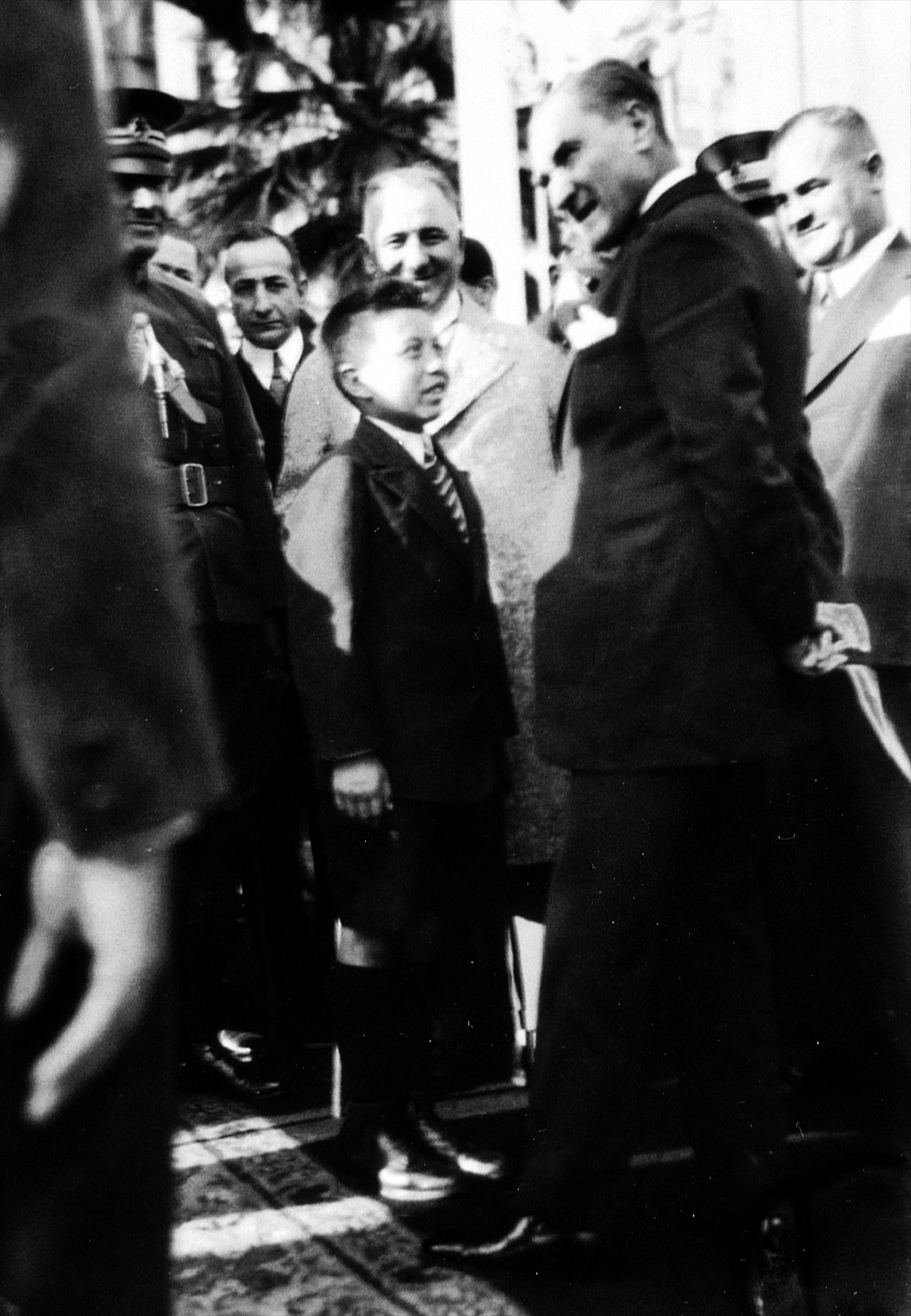
Known as Sığırtmaç Mustafa, he met Atatürk while herding cattle near Yalova in the summer of 1929.
The child of a poor immigrant family from Bulgaria, Mustafa was ill and undernourished but eager to learn. Atatürk first arranged hospital treatment in Şişli, then enrolled him in a primary school in Beşiktaş.
With continued support, Mustafa completed middle school, military high school and the Military Academy, eventually becoming an officer. He retired to Yalova and died there on 15 January 1987.
Published accounts identify these 2 children as being under Atatürk's protection rather than among his adopted children. Surviving public biographies provide too little dependable detail for full individual profiles, so they are named here without adding unverified stories.
Atatürk directed that the annual income from his İş Bankası shares provide monthly payments of 800 lira to Afet İnan, 600 to Sabiha Gökçen, 200 to Ülkü, and 100 each to Rukiye and Nebile. He also set aside the money needed to buy Sabiha a house.
This 8-and-2 grouping uses the Atatürk Encyclopedia’s account, together with broader published records and the published text of Atatürk’s will. It keeps adopted children distinct from children under his protection.
Away from ceremony
He built a substantial library, annotated books and read across history, politics, language and science. Official biographies record knowledge of French and German.
He particularly enjoyed Rumelian songs and took an interest in Turkish music. He danced and supported the presentation of zeybek as a modern social dance.
At Ankara’s Forest Farm, he personally oversaw efforts to turn dry land into productive farmland. In Yalova, he had a pavilion moved nearly five metres to spare the branches of a plane tree.
He hosted statesmen, scientists, artists and writers. Meals could continue late because they doubled as seminars and policy discussions.
Horse riding, swimming, billiards and backgammon were among his recreations. He also enjoyed wrestling and watched major matches in Ankara, including the 1931 oil-wrestling championship.
He was especially fond of his dog Foks was Atatürk’s best-known dog. He bought him from a travelling photographer in Yalova. Foks’s taxidermied body is displayed at the Atatürk and War of Independence Museum at Anıtkabir. Yalova account · Anıtkabir museum and horse Sakarya was Atatürk’s favorite horse. Named after the Battle of Sakarya, a turning point in the War of Independence, he is the horse depicted beneath Atatürk in the Victory Monument at Ankara’s Ulus Square. Monument history. Foks stayed with him at Çankaya, while Sakarya is depicted in Ankara’s Victory Monument.
He took care over his appearance, from military uniform to tailored suits and hats. His changing style can be seen in photographs from the republic’s early years.
Music accompanied many evenings, but surviving recollections emphasise serious discussion as much as entertainment. At Dolmabahçe and on the presidential yacht, conversations about state and culture could continue into the early morning.
The preserved Çankaya library contains books with extensive annotations and underlining, suggesting they were actively studied rather than simply collected. Researchers have linked this reading to his speeches, historical interests and reform work.
Private spaces, public work
From his childhood home in Thessaloniki to the presidential residences at Çankaya, Dolmabahçe and Florya, the places in Atatürk’s life trace a path from private beginnings to public duty.
Mustafa was born in an upstairs room of the family’s three-storey house in Thessaloniki and spent his early childhood there. After his father’s death in 1888, Zübeyde moved the children to a smaller neighbouring house. His birthplace is preserved today as the Atatürk House Museum.
The modest Ankara house became his principal residence during the National Struggle and the republic’s formative years. Its preserved bedroom, study and library show an intentionally restrained domestic setting.
Atatürk stayed at Dolmabahçe Palace during his time in Istanbul, using it both as a residence and a place of work. His study and bedroom have been preserved, and it was here that he died on 10 November 1938.
Built as a summer residence on the Marmara shore, Florya offered access to swimming and sea air while still hosting political and scientific meetings and foreign guests.
Atatürk’s schedule changed with travel, parliament, official audiences and military or diplomatic demands. A recurring pattern in memoirs is sustained reading and discussion, late evening working sessions, and frequent inspection journeys outside Ankara. It is more accurate to describe this rhythm than to claim a fixed hour-by-hour “typical day.”
His health deteriorated during 1938 from liver disease. He continued to follow state affairs as his condition allowed. He died in his room at Dolmabahçe Palace at 9:05 a.m. on 10 November.
Residence history: the Ministry of Culture and Tourism’s records for the Atatürk House in Thessaloniki, Çankaya Museum Pavilion, National Palaces’ Dolmabahçe record, and the Florya Marine Mansion history.
Istanbul, 1938
Atatürk died at Dolmabahçe Palace at 9:05 a.m. on 10 November 1938.
Following funeral ceremonies in Istanbul and Ankara, his coffin was placed in a temporary tomb at Ankara’s Ethnography Museum on 21 November, where it remained for nearly fifteen years. On 10 November 1953, his remains were transferred to Anıtkabir, his permanent resting place.
Before his death, Atatürk had already transferred his farms to the Treasury and donated other property to the municipalities of Ankara and Bursa. His will provided income for his sister Makbule and for Afet, Sabiha Gökçen, Ülkü, Rukiye and Nebile, while also providing support for the higher education of İsmet İnönü’s children. The remaining annual income was to be divided equally between the Turkish Historical Society and the Turkish Language Association.
Continue through the full timeline


