Early Life (1881-1905)
Birth in Thessaloniki
Born as Mustafa in Thessaloniki (now in Greece), then part of the Ottoman Empire. His father, Ali Rıza, worked as a customs officer and lumber trader, while his mother, Zübeyde, was a religious but progressive woman who strongly valued education.
His birth year is officially recorded as 1881, though Atatürk later chose May 19 as his birthday-the day he landed in Samsun to begin the War of Independence.
Father's Death & Early Education
His father died when Mustafa was only seven. Despite financial difficulties, his mother made sure he continued his education, first at a traditional religious school and later at a modern school.
Military School & the Name "Kemal"
He entered a military secondary school in Thessaloniki, where his mathematics teacher gave him the name “Kemal” (meaning “perfection”) to distinguish him from another student named Mustafa. He did very well in his studies and showed early leadership qualities.
Istanbul Military Academy
He later transferred to the prestigious Ottoman Military Academy in Istanbul. During this time, he began questioning the decline of the Empire and thinking about reforms. He also read widely about Ottoman, French, and world history.
Military Academy Graduation
Graduated from the Ottoman Military Staff College as a captain. He ranked highly in his class and began his career as a trained military officer.
First Political Activities
While stationed in Damascus, he formed secret groups with fellow officers who supported constitutional reform. These early activities helped shape his political thinking.
Military Career & Rise (1906-1918)
Young Turk Revolution
The Committee of Union and Progress, known as the Young Turks, forced Sultan Abdul Hamid II to restore the constitution. Mustafa Kemal supported the reform but was often critical of the movement's leadership.
Libyan Campaign & Balkan Wars
He fought against the Italian invasion in Libya, where he gained important battlefield experience. He later fought in the Balkan Wars (1912-1913), when the Ottoman Empire lost most of its European territories. These defeats strongly influenced his views on military strategy and national identity.
Battle of Gallipoli
As a Lieutenant Colonel commanding the 19th Division, Mustafa Kemal helped defend the Gallipoli peninsula against the Allied invasion. His leadership and battlefield decisions became widely recognized.
- April 25, 1915: Correctly predicted the main Allied landing site and positioned his forces accordingly
- Famous Order: "I don't order you to attack, I order you to die. In the time it takes us to die, other forces and commanders can come and take our place."
- Narrow Escape: Shrapnel hit his pocket watch, saving his life.
- Result: After 8 months of heavy fighting, Allied forces withdrew from Gallipoli. Mustafa Kemal emerged from the campaign with national prominence.
Historical Significance: The Ottoman defense prevented the Allied fleet from forcing the Dardanelles and made Mustafa Kemal one of the campaign’s best-known Ottoman commanders. The reputation he gained later supported his leadership in the national movement.
Caucasus and Syria Campaigns
Promoted to Pasha (general). He fought against Russian forces in the Caucasus and later commanded troops in Syria. During this time, he became increasingly critical of the influence German advisors had over Ottoman military decisions.
Ottoman Defeat & Armistice
World War I ended in defeat for the Ottoman Empire. The Armistice of Mudros was signed on October 30, 1918, allowing Allied forces to occupy Ottoman territories, including Istanbul. The empire was close to being divided among foreign powers.
British, French, Italian, and Greek forces occupied various parts of Anatolia. The Treaty of Sèvres planned to divide Turkey among foreign powers, leaving only a small inland state.
War of Independence (1919-1922)
Landing at Samsun - The Spark of Independence
Mustafa Kemal was officially sent by the Sultan's government to Anatolia to disband nationalist forces. Instead, he began organizing resistance against foreign occupation. This date later became Turkey's Youth and Sports Day.
Atatürk defied the Sultan and Allied powers, risking execution for treason. This was the beginning of Turkey's fight for independence.
Amasya Circular & Congress Movement
He issued the Amasya Circular, declaring that the nation's independence would be secured by the will of the people. He later organized the Erzurum and Sivas Congresses, where representatives from across Anatolia pledged to resist foreign occupation.
These congresses established the principle of popular sovereignty and laid the groundwork for a new government separate from the Sultan.
Grand National Assembly Founded
The Grand National Assembly opened in Ankara on April 23, 1920. Mustafa Kemal was elected its first speaker the following day. April 23 is now celebrated as National Sovereignty and Children's Day in Türkiye.
The War on Multiple Fronts
Led Turkish forces against:
- Armenian Forces (East): Treaty of Kars (1921) established eastern borders
- French Forces (South): Franklin-Bouillon Agreement (1921) ended French occupation of southern Turkey
- Greek Forces (West): The most challenging conflict
Battle of Dumlupınar
As Commander-in-Chief, Atatürk led the "Great Offensive" that defeated the Greek army. Greek forces retreated to the coast and were evacuated. This battle is widely seen as the final victory of the War of Independence.
Campaign outcome: The offensive broke the Greek defensive position and forced a rapid withdrawal toward the Aegean coast. Its success ended the principal military phase of the War of Independence and strengthened Ankara’s position in the armistice negotiations.
Liberation of Izmir
Turkish forces entered Izmir and ended the three-year Greek occupation. Crowds celebrated in the streets. The War of Independence was effectively over.
Abolition of the Sultanate
The Grand National Assembly voted to abolish the Sultanate. The last Sultan, Mehmed VI, fled the country on a British warship on November 17. This brought more than 600 years of Ottoman rule to an end.
Treaty of Lausanne
Turkey signed the Treaty of Lausanne, replacing the humiliating Treaty of Sèvres. Turkey gained international recognition of its modern borders and sovereignty. Atatürk refused to accept any terms that compromised Turkish independence.
Diplomatic Outcome: The Treaty of Lausanne was negotiated rather than simply imposed by the victorious powers, reflecting Turkey’s improved bargaining position after the War of Independence and Atatürk’s broader political strategy.
Founding the Republic (1923-1927)
Proclamation of the Republic
The Grand National Assembly proclaimed the Republic of Turkey and elected Mustafa Kemal its first president. This date later became Republic Day, one of Turkey's most important national holidays.
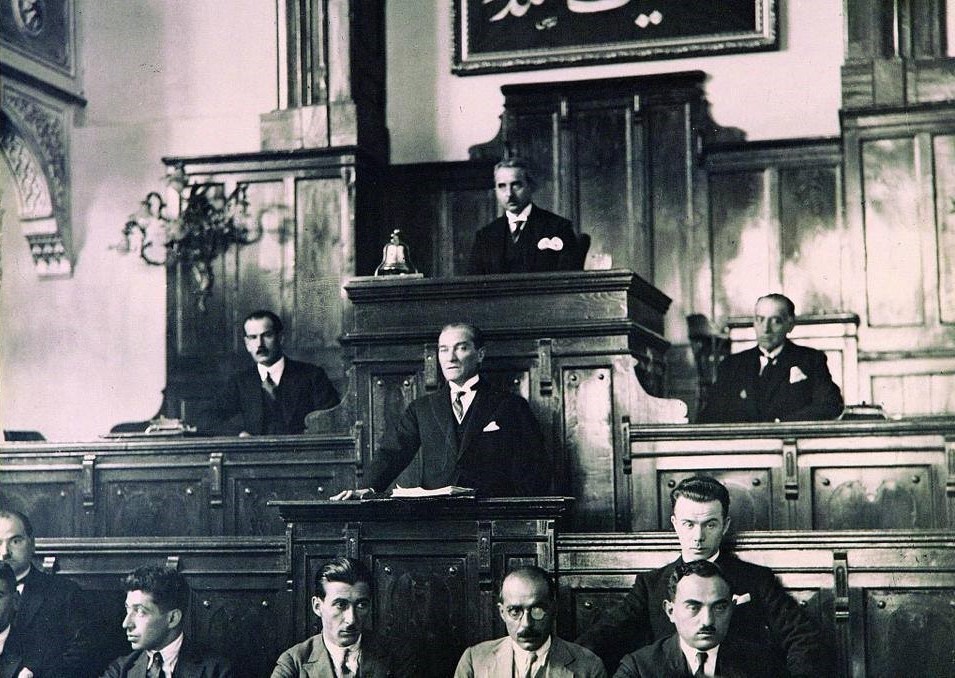
At 8:30 PM the proclamation was officially announced. At age 42, Atatürk became the leader of a new nation built from the remains of the Ottoman Empire.
Abolition of the Caliphate
The Caliphate was abolished, ending its political role in the new republic. Religious schools and courts were also reorganised, while education was unified under the Ministry of Education.
On the same day, the Diyanet, formally the Presidency of Religious Affairs, was established to administer religious affairs. Its role included overseeing mosques, imams, sermons and religious guidance within the framework of the state.
Revolutionary Significance: The reform separated religious authority from political sovereignty without seeking to remove religion from society. Instead, religious administration was placed under the authority of the secular republic.
New Constitution
A new constitution was adopted declaring popular sovereignty, establishing separation of powers, and guaranteeing civil rights. It stated: "Sovereignty belongs to the nation without reservation."
Hat Law - Clothing Reform
The fez and traditional headwear were replaced with Western-style hats for men. This reform was part of a broader effort to modernize clothing and move away from Ottoman traditions.
While controversial, Atatürk argued that the fez was a symbol of backwardness and that modern nations needed modern dress. Atatürk personally traveled across the country demonstrating the new style and encouraging people to adopt more modern dress.
Swiss Civil Code Adopted
Islamic family law was replaced with a civil legal system based on the Swiss Civil Code. This introduced major changes to marriage and family law:
- Polygamy was abolished and monogamy became the legal standard
- Religious marriage was replaced by civil marriage
- Women gained equal inheritance rights
- Women gained the right to request divorce
- Marriage required the consent of both partners
These reforms significantly changed family law and improved women's legal rights in the new republic.
Italian Penal Code Adapted
Turkey adopted a modified version of the Italian Penal Code, continuing the modernization of its legal system. Laws were now secular and based on European models.
Language, Social and Legal Reforms (1928-1935)
Alphabet Revolution
The Ottoman Arabic script was replaced with a modified Latin alphabet. Atatürk personally promoted the reform and traveled across the country teaching the new alphabet using a portable blackboard.
The reform was necessary because:
- The Arabic script was complex and had multiple forms for each letter depending on its position in a word
- Literacy was very low, estimated around 9%-11%
- Enabled access to Western scientific and technical literature
- Many people learned to read for the first time within a few months
- By 1935, literacy rates had significantly increased
Atatürk even obtained a teaching certificate and personally taught citizens across the country, including workers, farmers, and government officials. He thereby took an active role in the nationwide literacy campaign.
Educational Expansion
A nationwide literacy campaign was launched and thousands of Nation Schools (Millet Mektepleri) were opened for adult education. Primary education also became free and compulsory for all children, regardless of gender or social background.
Women's Municipal Voting Rights
Women gained the right to vote and run for office in municipal elections-ahead of France (1944), Italy (1945), and Switzerland (1971).
Historical & Linguistic Institutions
Founded the Turkish Historical Society and Turkish Language Association to research Turkish history and language, promoting national identity based on Turkic heritage rather than Ottoman-Islamic tradition.
University Reform
Istanbul University was reorganized and modernized as part of a major reform of higher education. The goal was to build a modern university system based on scientific research and European academic standards.
Turkey also welcomed many scholars fleeing Nazi Germany to teach in Turkey, enriching Turkish higher education while saving lives.
Women's National Voting Rights
Women gained full political rights-right to vote and run for national parliament. In the 1935 elections, 18 women were elected to parliament (4.5% of seats)-higher than many Western countries at the time.
This made Turkey one of the first countries in the world to grant women full political rights. Atatürk stated: "Everything we see in the world is the creative work of women."
Surname Law & "Atatürk"
All citizens were required to adopt family surnames. Previously, most people used only a first name along with their father's name.
The Grand National Assembly gave Mustafa Kemal the surname "Atatürk", meaning "Father of the Turks."
It became illegal for any other person to use this surname. To this day, "Atatürk" refers to one man only.
Adoption of Sabiha Gökçen
Among Atatürk's 8 adopted children, Sabiha Gökçen became the world's first female combat pilot. In 1937 she took part in military operations, becoming an important symbol of women's progress in Turkey.
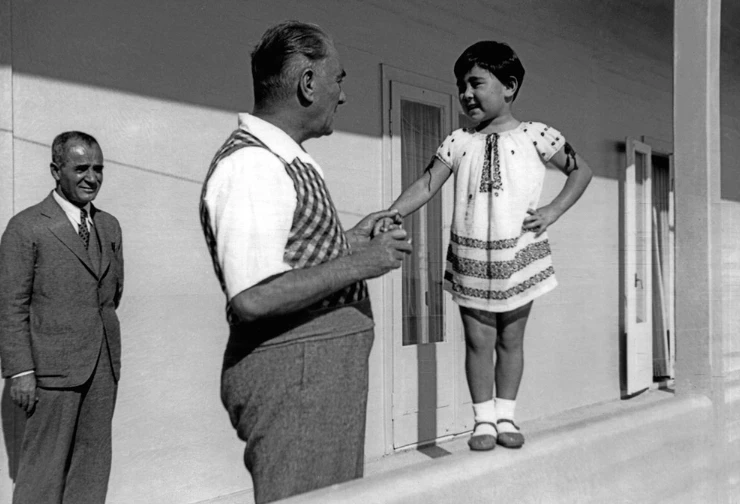
Gökçen later became closely associated with the republic’s presentation of new educational and professional roles for women. She lived until 2001, inspiring generations of Turkish women. Today, Istanbul's second airport is named after her: Sabiha Gökçen International Airport.
Sunday Rest Day & Western Calendar
Turkey officially adopted the Gregorian calendar officially (already in use since 1917) and made Sunday (instead of Friday) the weekly rest day, aligning Turkey with the Western business world while maintaining religious freedom.
Final Years & Legacy (1936-1938)
ANZAC Memorial Message
Atatürk shared a message honoring the soldiers who died at Gallipoli. His words helped transform the memory of the battle into a symbol of reconciliation and peace:
"Those heroes that shed their blood and lost their lives…
You are now lying in the soil of a friendly country. Therefore rest in peace. There is no difference between the Johnnies and the Mehmets to us where they lie side by side in this country of ours.
You, the mothers, who sent their sons from far away countries, wipe away your tears.
Your sons are now lying in our bosom and are in peace. After having lost their lives on this land they have become our sons as well."
Montreux Convention
Negotiated the Montreux Convention, giving Turkey full control over the Turkish Straits, including the Bosphorus and the Dardanelles, while regulating international passage. This strengthened Turkey's sovereignty and control over a key strategic region.
Six Arrows - Kemalist Principles
The six fundamental principles of Kemalism were added to the constitution:
- Republicanism: A state governed by elected representatives
- Nationalism: Unity of Turkish nation regardless of religion or ethnicity
- Populism: Sovereignty belongs to the people
- Statism: State-led economic development
- Secularism: Separation of religion and state
- Reformism: Continuous modernization and progress
Declining Health
His health deteriorated due to cirrhosis of the liver. Despite illness, he continued working on state affairs and planning Turkey's future. Doctors gave him only months to live.
Death at Dolmabahçe Palace
Mustafa Kemal Atatürk died at 9:05 AM at Dolmabahçe Palace in Istanbul at the age of 57. The country entered a period of national mourning as millions paid their respects.
Final Will: He left his entire estate to the Turkish nation, including his properties and savings. Even the rights to his memoirs went to education and charitable foundations.
To this day, every November 10 at 9:05 AM, Turkey observes a national moment of silence. Sirens sound across the nation, traffic stops, and people stand in tribute for one minute.
State Funeral
His coffin was carried through Istanbul and Ankara as millions lined the streets. Representatives from many countries attended the funeral. He was temporarily buried at the Ethnography Museum in Ankara.
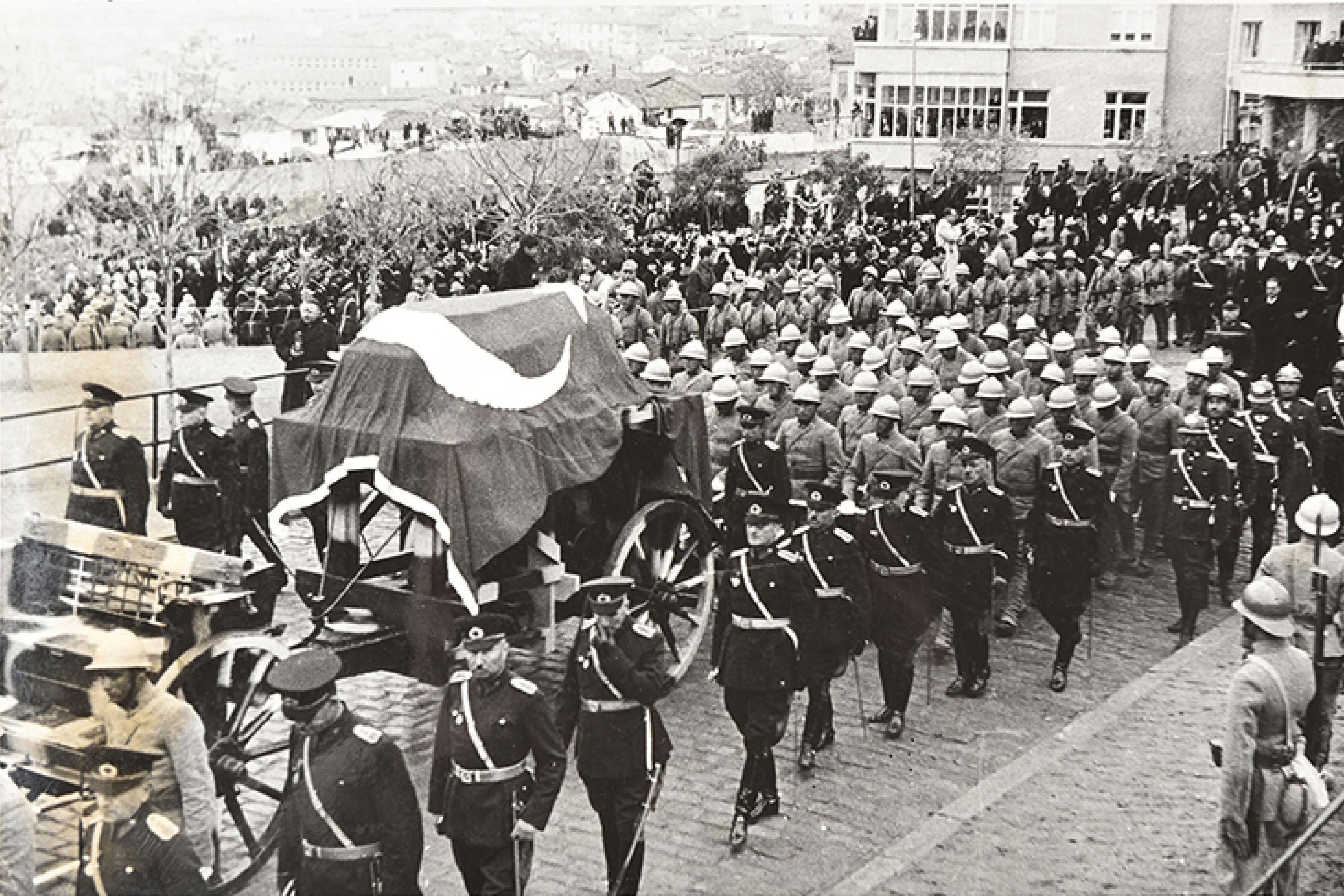
Final Rest at Anıtkabir
Fifteen years after his death, his body was moved to Anıtkabir, the monumental mausoleum built in his honor in Ankara. The complex took 8 years to complete and remains one of Turkey's most visited sites.
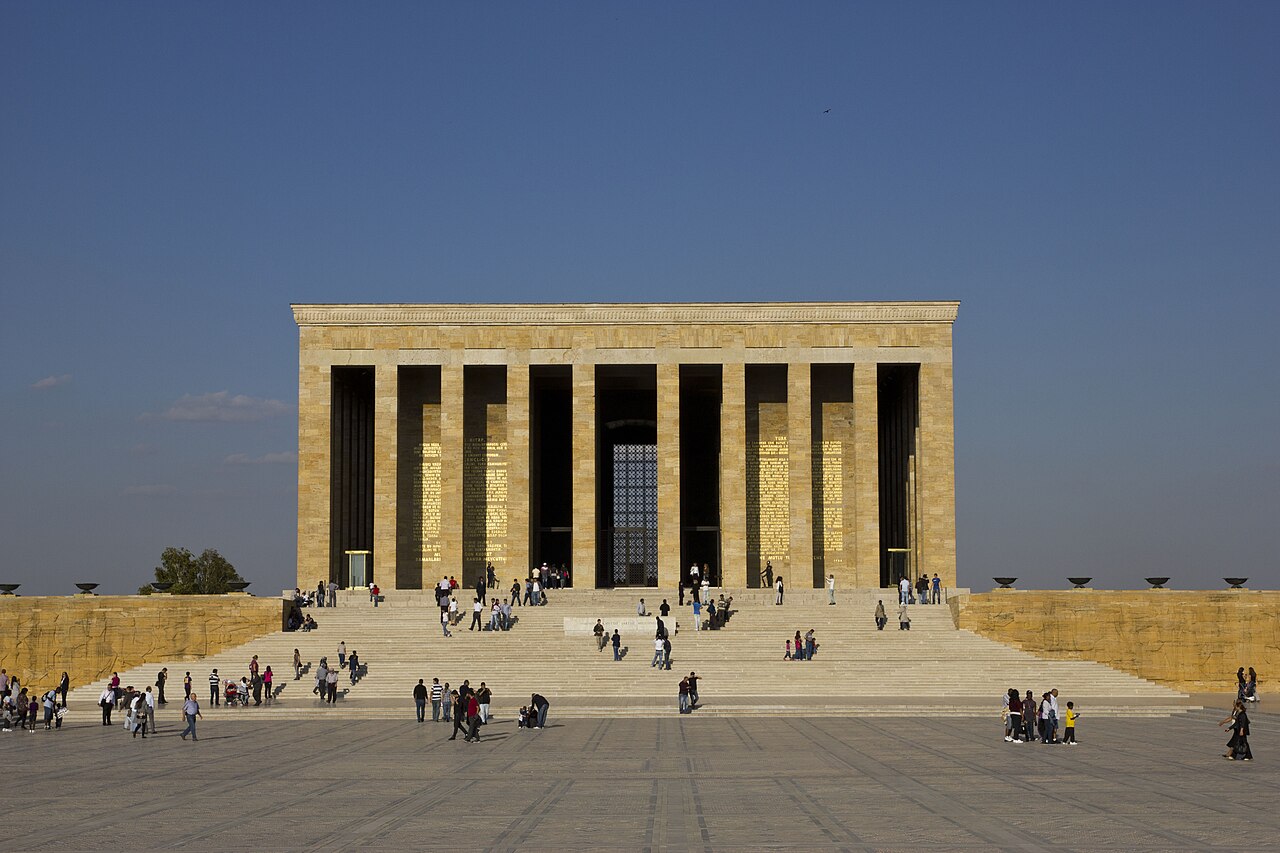
Millions of Turkish citizens and foreign leaders visit annually to pay respects. World leaders visiting Turkey traditionally lay wreaths at his tomb.